Shift’s controlled-access policy for Aslan
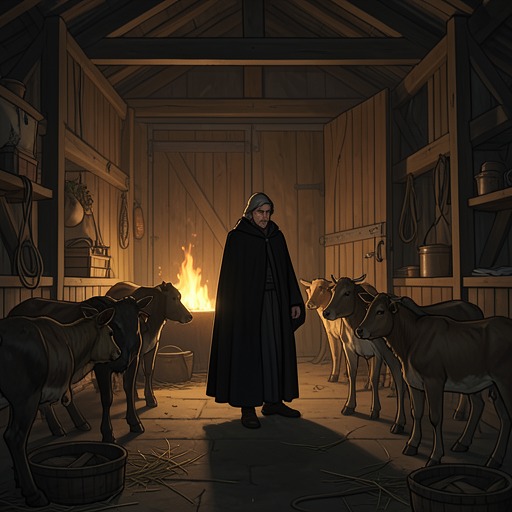
The Last BattleShift’s controlled-access policy for Aslan is a mechanism of rule: the Ape claims exclusive authority to speak for Aslan, blocks the Beasts from questioning him directly, and later controls entry into the Stable through a staged invitation laced with threats. The policy presents exclusion as protection and permission as peril, keeping the creatures dependent on the Ape’s account of what Aslan wants.
Intermediary and Authority
When the Head Squirrel asks whether Aslan himself might speak to the Beasts, the Ape refuses. Aslan may come out briefly that night, he says, but the creatures will not be allowed to crowd around him or ask questions. Anything they want to say must pass through the Ape, who will decide whether it is worth bothering Aslan with. He then dismisses the squirrels to fetch nuts, demanding delivery by the following evening and threatening punishment if they fail.
The arrangement gives the Ape more than the power to relay messages: he claims the power to filter them. He reinforces that monopoly by asserting that he is a Man, not an Ape, and that his supposed great age and wisdom explain why Aslan speaks only to him. The other animals, he says, are too stupid for Aslan to address. His claimed identity and authority turn the ban on direct contact into a hierarchy, with the Ape at its privileged center and the Beasts reduced to recipients of orders.
Access as Discipline
The restriction works alongside material demands. The squirrels are sent away to collect nuts even though their winter stores are nearly exhausted and they have already given the Ape more than they can spare. The episode shows the policy operating in practice: an appeal to Aslan is cut off, the Ape appoints himself its gatekeeper, and the creatures are redirected to labor under threat.
The Ape also uses the alleged wishes of Aslan to make coercion sound like discipline. He claims that Aslan has been too soft with the Beasts and will now make them think he is not a tame lion. He further declares that Aslan has settled arrangements with the King of Calormen: horses and other working animals are to be sent south to labor, while digging animals, including moles, rabbits, and Dwarfs, are to work in mines. Because the Beasts cannot verify these claims with Aslan, the Ape’s monopoly on access also serves as a monopoly on what they can know about their ruler.
The Stable’s Conditional Invitation
Later, the Ape tells the assembly that anyone can see Tashlan but that he will not come out; those who wish to see him must enter the Stable. The announcement initially sounds like a reversal of the earlier exclusion. The Beasts welcome the prospect of seeing him face to face, and the birds and dogs respond excitedly. Their movement toward the Stable door reveals how readily the promise of direct access restores their hope that things might return to how they were.
The Ape immediately sets a new condition: entry must be one at a time. Shift warns that Tashlan may swallow a visitor whole or destroy one with the terror of his eyes, and says that he himself would not like to enter that night. He then invites a Dwarf to go first. This is permission in form but intimidation in effect: the appeal to see Tashlan becomes a test in which each creature must face danger alone, without the reassurance of a crowd.
What the Policy Conceals
Griffle answers the invitation by asking how the Beasts can know what is inside the Stable. The question exposes the uncertainty that the policy has sustained: the animals have been told who may speak for Aslan and where they must go to see Tashlan, but they have not been given reliable access to either. The Ape responds with a taunt, treating their hesitation as evidence that they have begun to suspect something is there.
Across these encounters, controlled access changes from an explicit ban on questions to a fearful, one-at-a-time entrance. The form shifts, but the dependence remains: the Ape still dictates the terms on which the Beasts may approach the authority invoked in his commands. By controlling both access and the interpretation of what lies beyond it, he turns their desire for reassurance into another instrument of rule.